
Setting up a commercial kitchen is one of the most expensive and most permanent decisions a restaurant owner makes. Get the equipment right, and your kitchen runs fast, safe, and profitable for a decade. Get it wrong, and you’re stuck with breakdowns, wasted energy bills, and a layout that fights your staff every service.
At SidakTechnology, we’ve spent over a decade fitting out kitchens for restaurants, hotels, cloud kitchens, and caterers across Delhi and beyond. Here’s the framework we walk every customer through before they buy a single appliance.
1. Start With Your Menu, Not the Catalogue
The single biggest mistake first-time buyers make is shopping equipment before finalising the menu. Your menu determines everything: how many burners you need, whether you need a tandoor or a convection oven, how much cold storage capacity makes sense, and how much prep space your team needs during peak hours.
Before you buy anything, map out your top 20 dishes and the equipment each one touches, from raw storage to plating. This list becomes your real equipment brief.
2. Size Equipment to Peak Volume, Not Average Volume
Undersized equipment is the most common reason kitchens fall apart during a busy Saturday night. Size your ranges, ovens, and refrigeration to your busiest expected hour, not your daily average. A slightly larger investment upfront is far cheaper than losing orders during your highest-revenue moments.
3. Prioritise Energy-Efficient Models
Commercial kitchens run appliances for 10-16 hours a day, often every day of the year. Energy-efficient refrigeration, induction cooktops, and insulated ovens can cut your monthly power bill meaningfully compared to older or lower-grade equipment. Ask for energy ratings before you buy, not after.
4. Don’t Ignore Installation and Service Support
Equipment is only as good as the team that installs and maintains it. Commercial kitchens can’t afford multi-day downtime when something breaks. When comparing suppliers, ask directly:
- Do they handle delivery, installation, and commissioning, or just delivery?
- What’s the average response time for repairs?
- Are spare parts stocked locally, or shipped from elsewhere?
5. Plan for Workflow, Not Just Equipment
Even the best individual appliances can create a bottleneck if the kitchen layout forces staff to cross paths constantly. Think in terms of stations and flow: receiving → storage → prep → cooking → plating → wash-up. Equipment should support that flow, not interrupt it.
6. Choose Custom Configurations When Your Space Is Non-Standard
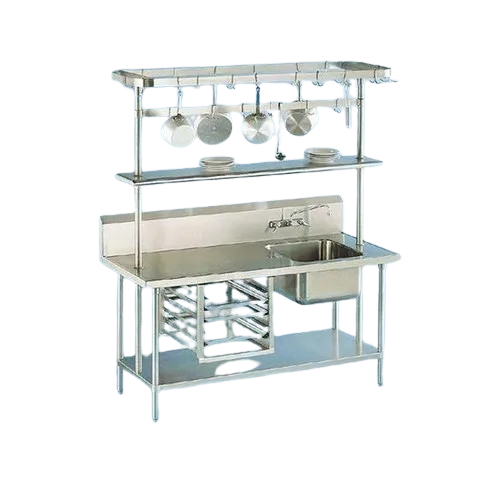
Most commercial kitchens in India work with tighter, more irregular spaces than what standard equipment dimensions assume. Custom-built sinks, tables, and counters that match your actual floor plan almost always outperform forcing standard sizes into an awkward layout.
Get a Second Opinion Before You Buy
A good supplier will walk your space, review your menu, and recommend equipment sized to your real volume, not just sell you the highest-margin item in stock. Our team at SidakTechnology offers exactly that consultation, along with delivery, installation, and ongoing maintenance across Delhi and pan-India.
Explore our full equipment range on the Services page, or get in touch for a free kitchen consultation.