
Introduction
Employers increasingly look beyond transcripts to find candidates who can solve real problems from day one. Recent technological change, remote work, and the rise of skills-based hiring mean recruiters prioritize demonstrable ability, culture fit, and continuous learning more than ever. This post explains why a degree alone is insufficient, which gaps matter most, and how you can close them quickly and credibly.
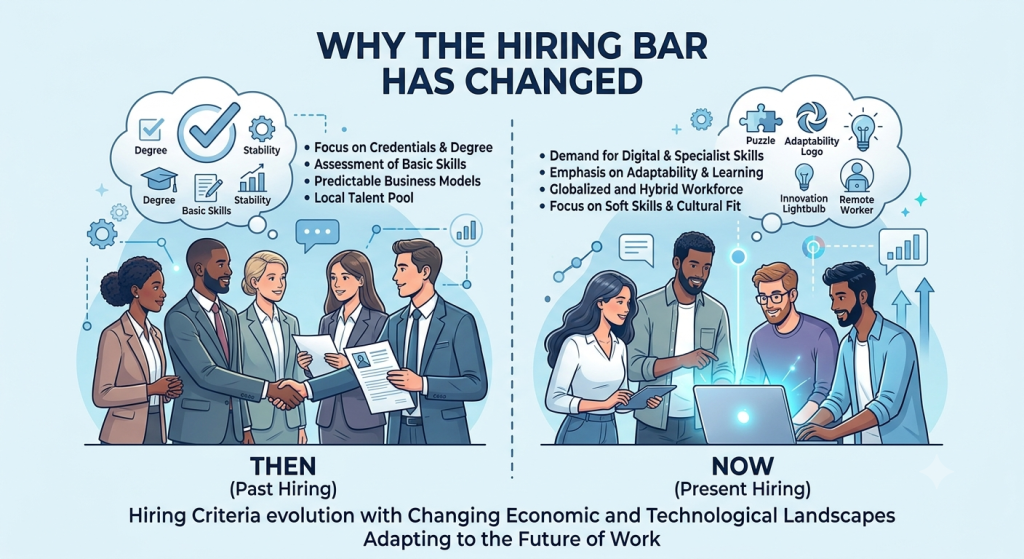
Why the hiring bar has changed
- Faster technology cycles. Job tools and platforms evolve rapidly, so employers want people who can learn and adapt, not only recall what they were taught in college.
- Skills-based hiring. Many companies now list specific tools, frameworks, or measurable outcomes on job posts and use skills tests in hiring processes.
- Focus on impact. Recruiters prefer candidates who can show measurable contributions (projects, internships, freelance work) over theoretical knowledge.
- Talent supply and competition. With more people earning degrees, a degree has become a baseline credential rather than a differentiator.
What employers look for now
- Practical, demonstrable skills: coding projects, marketing campaigns, financial models, UX case studies.
- Work-ready experience: internships, part-time roles, freelance gigs, volunteer projects, or contributions to open-source.
- Problem-solving and critical thinking: examples of how you approached and solved real problems.
- Communication and teamwork: ability to explain work clearly and collaborate across functions.
- Learning agility and curiosity: certifications, micro-credentials, bootcamps, or continuous learning habits.
Common gaps between degrees and employer needs
- Outdated curriculum vs. current tools and methods.
- Little or no real-world project experience or portfolio.
- Weak demonstration of soft skills (presentation, feedback handling, collaboration).
- No evidence of producing measurable outcomes.
- Limited exposure to cross-functional work or business context.
How to bridge the gap
- Build a focused portfolio: Create 3–5 high-quality projects that match your target role (web apps, case studies, content pieces, data analyses). Each should show context, your actions, and measurable results.
- Do short, targeted internships or freelance work: Even low-paid or volunteer roles can provide real outcomes you can cite in interviews.Earn micro-credentials and certificates: Choose reputable, role-specific programs (e.g., Google, AWS, Coursera specializations, bootcamps) and list them on your CV with project links.
- Learn modern tools: Identify the top tools used in job listings (e.g., Figma, SQL, Python, Google Analytics, Salesforce) and practice them through projects.
- Prepare to demonstrate skills: Create a case study, GitHub repo, blog post, or video walkthrough that you can share during interviews.
- Practice behavioral and situational answers: Use the STAR method (Situation, Task, Action, Result) to show problem-solving and teamwork.
- Network intentionally: Connect with alumni, attend meetups, and request informational interviews to learn real role expectations and referrals.
- Show continuous learning: Maintain a public learning log, blog, or LinkedIn posts showing what you learned and built.
Resume and LinkedIn tips to stand out
- Lead with results: Bullet points should use metrics (revenue impact, time saved, conversion lift, users served).
- Link to work: Add GitHub, portfolio site, SlideShare, or short video demos.
- Tailor for role: Mirror keywords from the job post and highlight the most relevant projects first.
- Use a skills section wisely: Include both technical and interpersonal skills, prioritizing those requested in the posting.
- Keep summaries evidence-based: Replace generic phrases with a one-line value statement (e.g., “Built an acquisition funnel that increased signups by 38% in 3 months”).
Interview preparation strategies
- Prepare 3–5 stories using the STAR framework emphasizing outcomes.
- Build a short portfolio demo you can present in 5 minutes.
- Practice common role-specific tests (coding problems, case interviews, design critiques) under timed conditions.
- Ask insightful questions that demonstrate business understanding, not just technical curiosity.
- Follow up with a short note that reiterates how your skills map to the job’s most important need.
Example — turning a degree into a hireable profile
- Candidate: B.A. in Marketing, final-year.
- Gap: No real marketing experience, limited analytics skills.
- Action plan: Complete a 6-week Google Analytics course, run a pro bono digital campaign for a local NGO, write a 1,000-word case study with metrics, add project links to LinkedIn.
- Outcome: Portfolio shows campaign strategy, ad spend, conversion lift; interviewer can verify results; candidate gets shortlisted for entry-level role.
What hiring managers say
Hiring managers often treat a degree as a signal of baseline knowledge but ask for proof that candidates can apply that knowledge in context, collaborate, and create impact quickly. Demonstrable projects and behavioral evidence reduce hiring risk and accelerate trust.